Virginia Governor Vetoes Tysons Corner Casino Referendum Bill Amid Fierce Local Resistance

The Veto That Stopped a Casino Push in Its Tracks
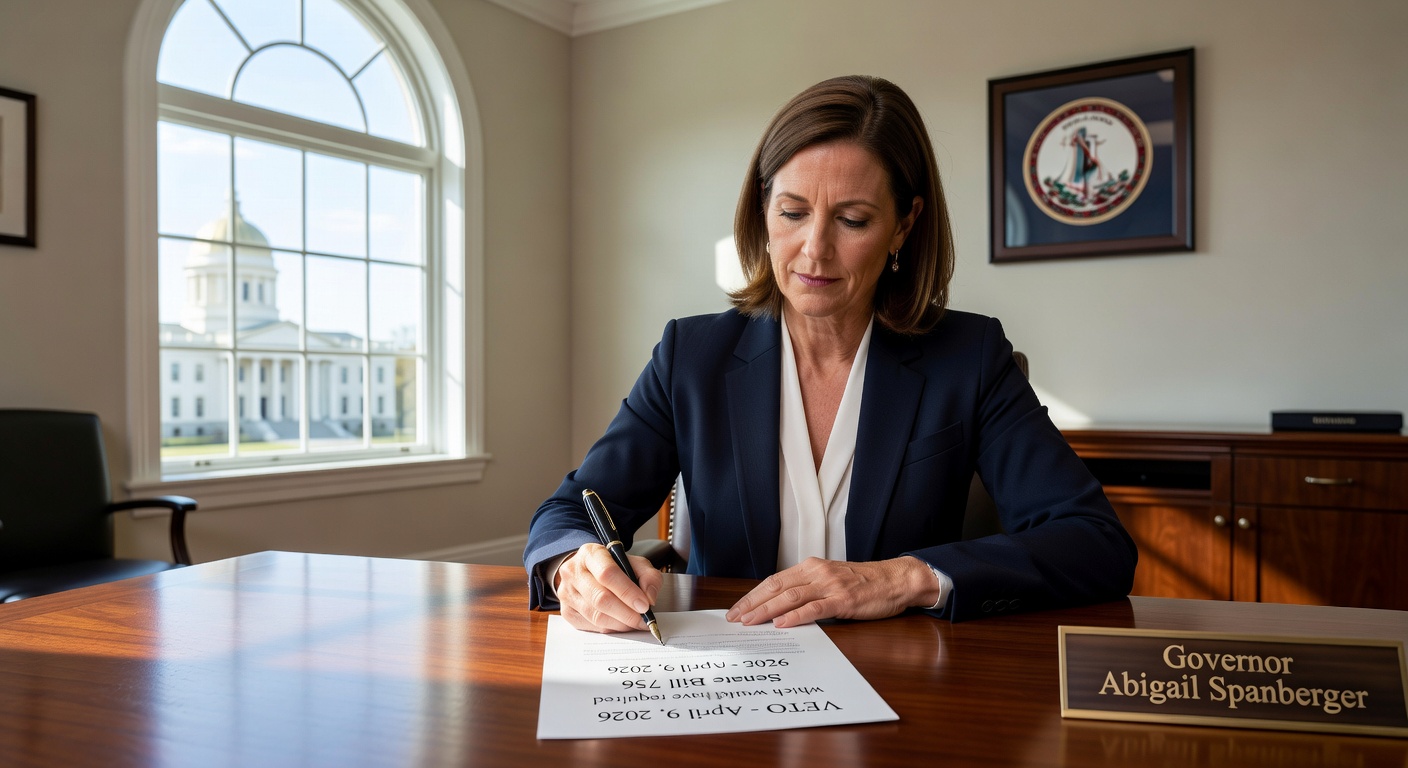
On April 9, 2026, Virginia Governor Abigail Spanberger delivered a decisive veto to Senate Bill 756, effectively halting a plan that would have compelled the Fairfax County Board of Supervisors to schedule a referendum on a massive casino and entertainment complex in Tysons Corner; this move came despite vocal opposition from the local board and a majority of Fairfax County legislators, who argued the project clashed with community priorities. The bill, passed by the state Senate earlier that session, aimed to override local reluctance by mandating a public vote on the 1.5-million-square-foot development near the Spring Hill Metro station, but Spanberger's action underscored tensions between state-level ambitions for gaming revenue and grassroots control over land use.
Observers note how such vetoes highlight the push-pull dynamics in Virginia's evolving gaming landscape, where lawmakers balance economic lures against neighborhood concerns; data from the Virginia Governor's official release details the reasoning, emphasizing protection of local zoning authority as a core principle. And while supporters framed the project as a boon for jobs and tax dollars, critics pointed to gridlock risks on already congested roads, potential spikes in crime, and a glaring absence of buy-in from those living closest to the site.
Unpacking the Proposed Tysons Corner Mega-Project
The development in question promised a glittering mix of casino floors, hotels, retail spaces, and entertainment venues sprawled across 1.5 million square feet, positioned strategically near the Spring Hill Metro to draw crowds from Washington D.C. and beyond; proponents, including Senate Majority Leader Scott Surovell, touted projections of thousands of construction jobs followed by ongoing employment in hospitality, alongside millions in annual revenue funneled back to state coffers for schools and infrastructure. Yet here's the thing: Fairfax County officials, who control zoning in this booming Northern Virginia hub, had already rejected the pitch multiple times, citing incompatibility with Tysons' master plan for office towers and transit-oriented growth rather than gambling hubs.
Those who've tracked Virginia's casino expansions know Tysons sits at a crossroads of wealth and transit, with daily commutes already testing limits; studies from local planning groups reveal traffic volumes near Spring Hill could surge by 20-30% under such a scheme, while crime data from established gaming zones like nearby Maryland resorts shows upticks in theft and disorder during peak hours. Senate Bill 756 sought to sidestep this by forcing a November ballot question, but the Fairfax Board, representing a densely populated area of over a million residents, pushed back hard, rallying most delegates to oppose what they called an imposition from Richmond.
Senate Bill 756: A Bid to Bypass Local No's
Introduced amid Virginia's 2026 legislative session, SB 756 targeted Fairfax specifically, requiring the Board of Supervisors to certify a referendum petition and place the casino question before voters; this wasn't a blanket gaming bill but a laser-focused maneuver after earlier attempts fizzled due to local vetoes. Lawmakers backing it argued democratic principles demanded a public say, especially since casino referendums elsewhere in the state—like those succeeding in Bristol, Danville, and Portsmouth—had unlocked economic revitalization; turns out, however, Fairfax's demographics skewed differently, with higher incomes and stronger anti-gambling sentiments rooted in suburban values.
Experts who've studied state-local conflicts point out how bills like this test federalism's edges, where Virginia's constitution grants counties broad home-rule powers unless explicitly overridden; the measure passed the Senate on party lines, with Surovell championing it as a revenue equalizer for underfunded services, but it stalled without House momentum partly due to Fairfax's delegation clout. And so, when it reached Spanberger's desk, the stage was set for a veto that preserved the status quo.
Governor Spanberger's Stated Reasons: Local Will and Gaming Integrity
In her veto statement, Spanberger laid out clear concerns, noting the bill eroded local decision-making by compelling a vote against the Fairfax Board's judgment; she warned it established a perilous precedent, potentially inviting similar overrides elsewhere and fracturing trust between state and localities. What's interesting here lies in her call for a unified statewide gaming regulator—an independent body to oversee operations, ensuring integrity, public safety, and uniform standards across Virginia's five licensed casinos.
According to figures from the American Gaming Association's state reports, fragmented regulation can breed inconsistencies, from licensing lapses to uneven problem-gambling protections; Spanberger highlighted this gap, arguing piecemeal bills like SB 756 complicated oversight in a market already generating over $500 million annually in taxes since 2021 expansions. Researchers observing Virginia's gaming rollout have found that strong central authority correlates with fewer scandals, as seen in Nevada's model under the Nevada Gaming Control Board, though she stopped short of endorsing the Tysons site outright.
Local Opposition Runs Deep in Fairfax County
Fairfax leaders, from Supervisors to Delegates, united against the bill, with public hearings drawing hundreds who decried noise, parking woes, and moral qualms; one study commissioned by the county projected 10,000 additional daily vehicle trips, exacerbating I-495 bottlenecks that already rank among the nation's worst. Residents near Spring Hill, many tech professionals drawn to Tysons' corporate parks, voiced fears of transformed neighborhoods, while faith groups and PTAs amplified worries over youth exposure to gambling.
But supporters countered with data from operational Virginia casinos, where Portsmouth's Rivers has created 1,300 jobs and $100 million in local taxes since 2022; Surovell, representing parts of Fairfax, insisted a voter test would settle debates, arguing unelected boards shouldn't block progress indefinitely. Still, polls conducted by local media showed 60% opposition, mirroring trends in affluent suburbs wary of gaming's social costs.
Broader Ripples in Virginia's Gaming Debate
This veto arrives as Virginia's casino experiment matures, with four resorts live and a fifth eyeing 2027; revenue hit $2.1 billion in gross gaming proceeds last year, per state lottery data, fueling debates on expansion. Yet Tysons' rejection echoes patterns elsewhere, like Henrico County's resistance to a proposed Henrico casino, where local control prevailed; observers track how such clashes shape policy, with lawmakers now eyeing comprehensive reforms over targeted bills.
Take the case of Danville, where a 2020 referendum flipped a declining textile town into a tourism draw, generating 20% of the city's budget; successes there fuel optimism, but failures to secure local nods—like in Norfolk's early snags—underscore the veto's logic. And while SB 756's override attempt failed, it spotlights revenue pressures amid budget shortfalls, with gaming now covering 5% of Virginia's general fund.
Looking Ahead: What's Next for Tysons and Virginia Gaming
With the veto in place, developers face steeper hurdles, needing Fairfax approval or a new legislative tack; Spanberger's push for a standalone regulator gains traction, potentially streamlining future bids while mandating community impact assessments. Local boards, emboldened, reaffirm zoning as their domain, but economic advocates warn stalled projects could cede ground to D.C. or Maryland competitors.
People following the beat know Virginia's gaming saga evolves fast, with 2027 sessions likely revisiting maps; until then, Tysons stays casino-free, preserving its skyline while state coffers hum from southern sites. The ball's now in lawmakers' court to balance growth without overriding wills.
Key Takeaways from the Veto
- Governor Spanberger vetoed SB 756 on April 9, 2026, blocking a forced Tysons casino referendum.
- Local Fairfax opposition cited traffic, crime, and zoning mismatches.
- Veto stresses local authority and need for statewide gaming oversight.
- Project promised jobs and revenue but lacked community backing.
- Virginia gaming generates billions, yet expansions hinge on local buy-in.
This episode reveals the tightrope Virginia walks in gaming policy, where state dreams meet local realities; as April 2026 unfolds, eyes turn to Richmond for the next chapter.