Global Shifts Toward Inclusive Design in Wheel and Reel Simulations on Multiple Platforms
Jordan Lorenz · Jun 15, 2026

Global Shifts Toward Inclusive Design in Wheel and Reel Simulations on Multiple Platforms
Developers across international markets have expanded accessibility options for wheel simulations and reel interfaces that run on smartphones, tablets, laptops, and desktop systems, with many updates rolled out ahead of June 2026 compliance deadlines in several jurisdictions. These changes focus on compatibility with screen readers, adjustable contrast settings, voice navigation, and haptic response patterns that allow broader participation without altering core game mechanics.
Device-Specific Adaptations in Current Use
Smartphone applications now incorporate gesture-based controls that replace traditional button presses, while tablet versions often add larger touch targets and screen magnification tools that sync across both wheel and reel formats. Desktop platforms have integrated keyboard shortcuts and external controller support, and researchers note that these features reduce input errors for users who rely on assistive hardware. Data from industry tracking services shows adoption rates climbing steadily through early 2026, particularly in regions where regulatory frameworks require minimum accessibility thresholds for licensed operators.
Regulatory Drivers Across Regions
European directives on digital accessibility, along with similar measures in Australia and Canada, have prompted operators to align interface designs with established standards for contrast ratios, text resizing, and alternative input methods. Reports from the Accessible Technology Research Network indicate that compliance efforts accelerated in the first half of 2026 as companies prepared for updated enforcement timelines. Observers note that these rules apply equally to wheel simulations, which require precise timing cues, and reel interfaces, which depend on clear visual sequencing, creating unified design challenges across game types.
One study released in spring 2026 examined portable device usage patterns and found that players using screen reader software completed sessions at rates comparable to standard users once voice prompts and audio feedback loops were enabled. That same analysis highlighted how cross-device synchronization allows settings chosen on a mobile phone to carry over to a connected desktop client, reducing setup time for repeated play.
Technological Features Gaining Traction
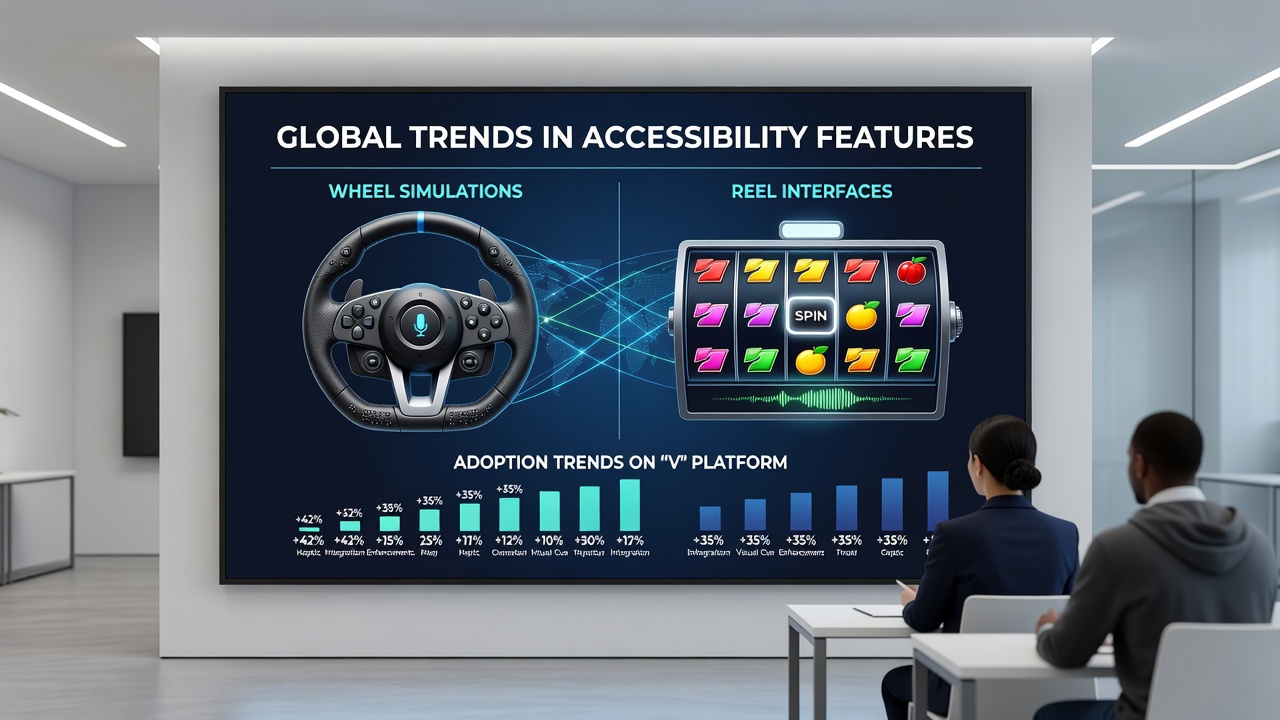
Voice command integration now covers spin activation, bet adjustments, and result announcements in multiple languages, while customizable color palettes address color vision differences that affect reel symbol recognition. Haptic patterns on mobile devices deliver distinct vibrations for wheel segment landings versus reel stop sequences, providing non-visual feedback that many players have adopted. Experts tracking these developments point to open-source toolkits that smaller studios use to embed these elements without rebuilding entire codebases.
According to findings published by the World Health Organization, approximately 15 percent of the global population experiences some form of disability that can affect digital interaction, a figure that has guided feature prioritization in gaming software updates. Separate data compiled by the International Game Developers Association shows that titles incorporating multiple accessibility layers retain users longer across both casual and extended sessions.
Cross-Platform Consistency Challenges
Maintaining uniform performance between mobile and desktop environments remains an ongoing task because operating system updates can disrupt screen reader compatibility or alter haptic intensity. Developers have responded by releasing modular accessibility packs that users can toggle independently of core game files. Case examples from North American and Asian markets demonstrate that phased rollouts, beginning with mobile applications in late 2025 and extending to desktop clients by June 2026, minimized service interruptions while meeting staggered regulatory checkpoints.
Those monitoring player migration between wheel and reel formats observe that accessibility settings transfer more smoothly when cloud-based profiles store preferences rather than device-local storage. This approach supports seamless transitions for users who switch between phones during travel and home computers for longer sessions.
Conclusion
Trends through mid-2026 reflect coordinated movement toward standardized accessibility layers that function across wheel simulations and reel interfaces on every major device category. Continued alignment between regulatory requirements and technical implementations suggests further refinements will appear in subsequent software cycles, driven by usage data and platform compatibility testing rather than isolated innovations.