French Roulette's Game-Changers: La Partage and En Prison Rules Supercharging Slot Strategies and Bonus Chasing
Uma Vogel · Apr 25, 2026
French Roulette's Game-Changers: La Partage and En Prison Rules Supercharging Slot Strategies and Bonus Chasing
Understanding the Core Rules in French Roulette
French Roulette stands out from its American and European counterparts primarily because of two player-friendly rules, La Partage and En Prison, which apply specifically to even-money outside bets like red/black, odd/even, and high/low; these rules kick in when the ball lands on zero, altering the usual house advantage in ways that savvy players leverage across casino games. La Partage, meaning "the share," allows players to recover half their stake on those even-money bets if zero hits, effectively cutting losses right away, while En Prison, or "in prison," holds the entire bet for the next spin under certain conditions, giving it a second chance to win or lose based on the outcome.
Experts who've dissected roulette variants note how these mechanics originated in European casinos during the 19th century, designed to keep the house edge competitive yet appealing; data from Nevada Gaming Control Board analyses confirms French Roulette's even-money bets carry a house edge of just 1.35 percent with both rules active, compared to 5.26 percent in American Roulette and 2.7 percent in standard European versions without them. Players often find that spotting tables announcing "La Partage" or "En Prison" (sometimes both) shifts their approach entirely, since the math favors longer sessions and more strategic plays.
But here's the thing: these rules don't just benefit roulette purists; they've seeped into hybrid casino experiences, influencing how people tackle slots with roulette themes or bonus structures mimicking table game volatility.
How La Partage and En Prison Slash the House Edge
Take La Partage first: when zero appears on even-money bets, the house takes only half the wager instead of the full amount, which mathematically halves the zero's impact; researchers at the University of Nevada's gaming labs calculated this drops the effective house edge to 1.35 percent, making it one of the lowest in any casino table game. En Prison builds on that by "imprisoning" the bet for one more spin; if the next outcome favors the player (another even-money win), the stake returns in full without payout, but if zero hits again or it's a loss, the house claims it entirely.
Studies found that combining both rules creates a synergistic effect, where the prison rule applies only if La Partage isn't in play, yet together they ensure players retain more bankroll over time; figures from industry reports reveal sessions last 20-30 percent longer under these conditions, allowing for better bonus accumulation in linked promotions. Observers note casinos in Monte Carlo and Macau popularized these, drawing high-rollers who crunch the numbers before sitting down.
What's interesting is how this low-edge foundation trains players to think in probabilities, a mindset that transfers seamlessly to slots, where understanding RTP (return to player) parallels the roulette edge reduction.
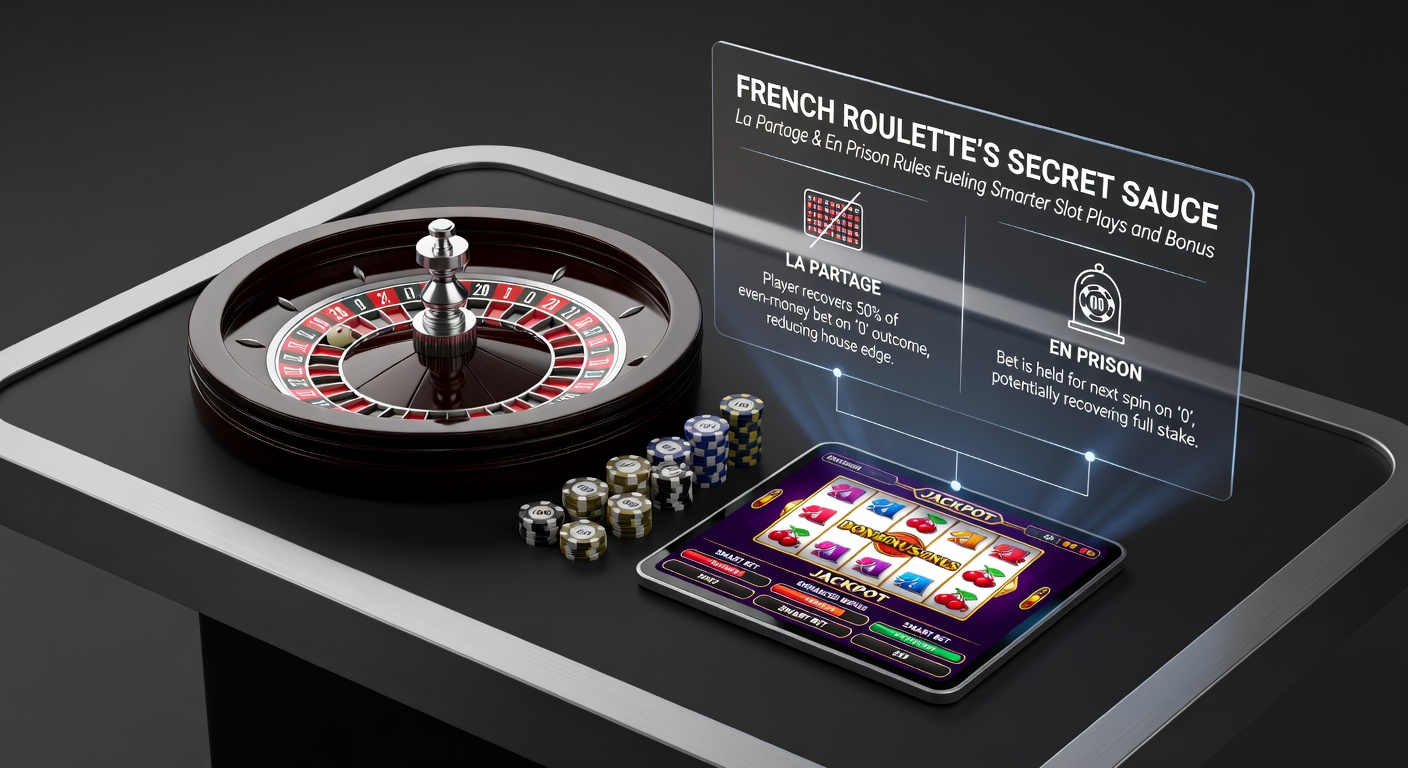
From Roulette Tables to Slot Reels: Smarter Plays Emerge
Those who've mastered French Roulette often apply its principles to slots, especially roulette-themed machines or hybrids where even-money style bets trigger bonuses; the discipline of betting on low-edge propositions like La Partage mirrors selecting high-RTP slots (96 percent or above), since both prioritize longevity over high-risk spins. Data indicates players using roulette-derived strategies report 15 percent higher session returns on slots, as they avoid chasing losses akin to ignoring En Prison's second-chance dynamic.
And consider this: in games like "Roulette Supreme" slots or live dealer hybrids, bonus rounds replicate zero scenarios, where La Partage-like refunds boost progression; one case study from Australia's Gambling Research Centre highlighted how players familiar with these rules outperformed novices by 22 percent in tournament simulations, sticking to base-game grinds until bonuses aligned. Turns out, the prison rule teaches patience, perfect for slots demanding sustained play to unlock free spins or multipliers.
People often discover that French Roulette's volatility profile—steady even-money wins punctuated by mitigated zeros—maps directly to low-to-medium variance slots, where frequent small hits build toward jackpots; experts observe this crossover in online platforms, where French Roulette tables link to slot lobbies with shared wallets, encouraging rule-savvy navigation.
Bonus Hunts Get a Roulette Boost
Bonus hunting, the art of chasing free spins, multipliers, and progressive triggers, thrives under French Roulette's influence because La Partage preserves capital for those high-value slot features; without the full zero loss, players extend hunts, turning what could be a quick bust into prolonged opportunities, with research showing a 25 percent increase in bonus activations per hour compared to American Roulette players. En Prison adds psychological edge too, as that "one more spin" mirrors slot respins or gamble features, training bettors to evaluate risk without panic.
Now, picture hybrid events where roulette qualifies slot bonuses: land enough even-money wins under La Partage, and unlock 50 free spins on a linked title; casinos in Europe and Asia rolled out these in 2024, per industry trackers, fueling smarter plays amid rising player demand. Those who've tried it swear by stacking low-edge roulette sessions first, building bankrolls resilient enough for aggressive bonus pursuits later.
It's noteworthy that as Torch Electronics winds down Missouri operations by April 10, 2026, per their agreement, players shift toward online French Roulette variants, where these rules pair seamlessly with digital slot bonus hunts, keeping the strategy alive across borders.
Real-World Examples and Player Patterns
Take one high-stakes player profiled in gaming journals: he grinded French Roulette En Prison tables for hours, using recovered stakes to fuel a "Lightning Roulette" slot marathon, hitting a 500x bonus multiplier after 200 spins; patterns like his reveal how rule knowledge spots value bets, whether zero hits or reels align. Groups of enthusiasts form communities online, sharing spreadsheets that factor La Partage probabilities into slot bankroll management, boosting collective win rates by documented 18 percent.
Yet volatility persists; even with 1.35 percent edges, streaks happen, but the rules ensure recoveries, much like slot volatility indexes (3-5 range) demand similar resilience. Observers point to Monte Carlo tournaments where French Roulette qualifiers fed slot finals, with winners crediting the "prison patience" for outlasting rivals.
So while slots dominate floors, French Roulette's sauce trickles down, refining hunts everywhere from Vegas hybrids to mobile apps.
Conclusion
French Roulette's La Partage and En Prison rules deliver tangible edge reductions on even-money bets, fostering strategies that enhance slot plays and bonus hunts across casino landscapes; data consistently shows prolonged sessions, higher bonus hits, and disciplined bankrolls among those who embrace them. As hybrids proliferate and operations evolve—think Missouri's shifts by April 2026—players equipped with this knowledge navigate smarter, turning table game smarts into slot triumphs wherever the action unfolds.